A BORDER BETWEEN US AND THEM
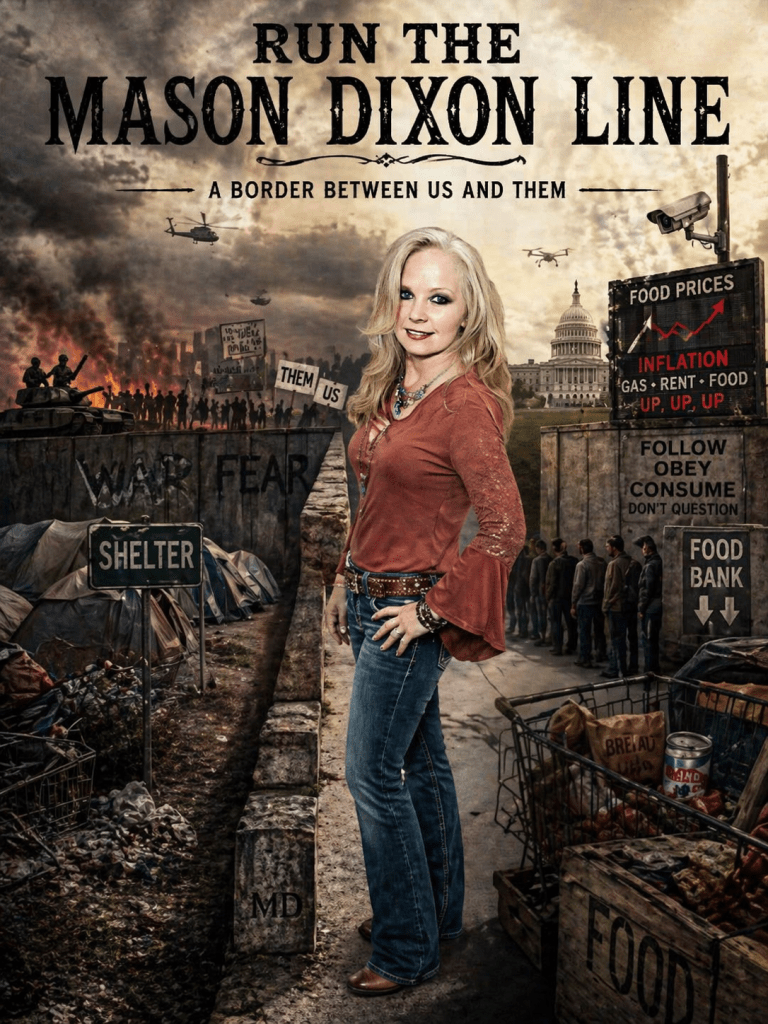
RUN THE MASON DIXON LINE

A BORDER BETWEEN US AND THEM

A maiden reared where mountains fold as claspèd hands in prayer,
Where coal-black dust doth cling to memory’s hem,
And porches bow beneath the seated weight of years—
There did she stand upon a line men drew
As though the earth itself were parchment tame.

Here drove they iron will through breathing soil,
Where Charles Mason marked the stars in earthly chain,
And Jeremiah Dixon bound heaven’s measure unto mortal dust—
As if the sky itself consented thus
To boundaries born of man’s presumptuous hand.

They named it law.
They named it peace.
They named it rightful separation.

Yet still the land beneath did softly groan.

Ere stone was set in stubborn ground, there lay
A garden green where sorrow had no speech,
Where light was cleft from dark by sovereign word,
And waters parted from the waters high—
Thus was the world itself begun in line.

Yet after came the deeper, darker breach:
When brother’s hand rose up against his kin,
And blood did write what earth could not erase.

So walked she on, and with each step unsealed
The ancient wounds that echo still in dust:

A flaming blade that barred the path to peace,
A flood that cleansed yet left but few to weep,
A tower split by tongues no longer shared,
A sea uprent that swallowed prideful might.

O man—thou lov’st the line thou fearest most.

Then thunder came to walk the waiting fields,
And brother stood ‘gainst brother clothed in death—
The American Civil War, writ not in ink but flame,
Did carve the boundary deeper into bone.

The ground drank deep—
Yet thirsted still.

And when the cannons hushed their iron tongues,
The line endured, though changed in subtle guise.

It stood in doorways barred by silent scorn,
It sat in pews where mercy knelt with pride,
It whispered law where justice should have cried—
The lash made quiet, yet the wound remained.

And now—behold—
The line hath shed its stone and soil,
And glimmers cold in glass and unseen thread.

It flickers in the eyes of countless screens,
Dividing thought as once it cleft the land.

Food wanes.
Shelter bends.
The air itself doth tremble under strain.

Men cry: “Obey.”
Others: “Resist.”
And all are bid to choose their standing ground.

Yet what is choice when forged in fear alone?

She saw the queues of want, the carts of need,
The hollow gaze of those with empty hands,
The distant wars made near by glowing panes,
Where ruin plays as nightly sacrament.

And still the voices call:

Stand here—
Or stand opposed.

She paused upon a weather-wornèd stone,
And laid her hand as one might touch a scar
That neither heals nor wholly fades away.

She thought upon the veil once torn in twain,
Upon the goat that bore another’s blame,
Upon the walls that fell to trumpet’s breath,
Upon the Christ who supped with cast-off souls
And drew no boundary ‘round His offered bread.

Then knew she this:

The line is drawn where fear would make a throne,
Where man divides his likeness into parts
That he might rule what he dares not embrace.

Before her lay the dark uncharted ground.
Behind—the long procession of divide.

And thus three paths did rise before her feet:

To stand—
And guard the line as sacred, fixed decree,
Lest chaos swallow what remains of form.

To cross—
And dare the peril truth demands of flesh,
As those who fled by night toward fragile dawn.

Or else—
To turn aside from both command and dread,
And walk where no man’s border bids her choose.

She stirred.

The wind held still.
The heavens watched in quiet witness.

Yet whether she did cross, or stayed, or strayed—
The tale withholds.

But this endures:

Where once the line did thunder as a law,
Now trembles faint—
A question, not command.

For till man asks who drew the first divide,
And whom it served, and what it cost in blood,
The garden falls, the brother strikes again,
The flood returns, the towers rise and break—
And all is writ once more in mortal grief.

Yet in the asking enters something rare:

A light unbound by north nor south nor stone,
A mercy fierce enough to name the wound,
A hope that walks where lines no longer rule.

Written by Marguerite Grace
Copyright Protected

 verse, possies, sonnets, and short stories