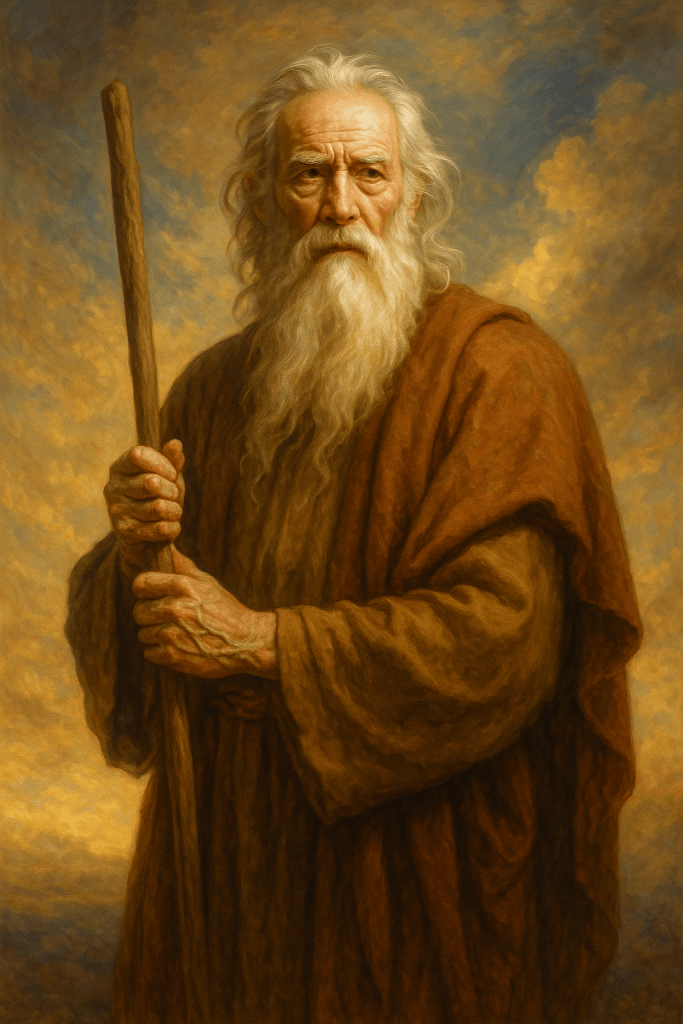
In days when giants walked the land, And Watchers fell by their own hand, There stood a man of solemn grace— Methuselah, the space of space.
His father walked with God and soared, A prophet, priest, and heaven’s scribe. But he remained—by choice, by will— To count the days till wrath stood still.
A child of prophecy and flame, Enoch named him with holy aim: “When he is gone, it shall be sent.” And heaven knew just what it meant.
He watched the sun rise cold and low, As angels wept and shadows grow. He heard the whispers of the deep, The cries of those who could not sleep.
He saw the Nephilim arise, With bodies strong and hollow eyes. He knew the Watchers’ sin was steep, And that the judgment would not sleep.
He kept the scroll, he held the line, A living clock in God’s design. Nine hundred years and sixty-nine— Each breath a pause in wrath’s decline.
He taught his grandson to obey, To build the ark, to light the way. He warned the people, mourned their fall, While wickedness consumed them all.
Yet mercy lingered at his door, The flood held back a moment more. The Lord would not unleash the tide, Until the oldest man had died.
And when he passed, the sky grew gray— The fountains split, the world gave way. For just as Enoch said it would, The judgment came like rushing flood.
But Methuselah—silent seer— Had served his task for many years. He held the gate, delayed the flame, Till only Noah bore the name.
In days when earth was young and wide, Enoch walked with God, side by side. A man of faith, pure and upright, He shunned the dark, embraced the light.
At sixty-five, Methuselah was born, A son to carry on till dawn. Three hundred years he journeyed on, With God, until his days were gone.
But gone not dead, for he was taken, To realms above, his soul awakened. No grave would hold this man so blessed, In heaven’s courts, he found his rest.
Through ten vast heavens he ascended, By angels’ wings, his path extended. In first, the stars and clouds reside, In second, fallen ones abide.
The third revealed both Eden’s grace, And hell’s tormenting, fiery place. The fourth, the sun and moon’s domain, With angels singing sweet refrain.
The fifth held giants, watchers chained, Their sins upon the earth remained. The sixth, the angels’ duties told, Of seasons, rivers, young and old.
The seventh heaven, bright and grand, Where seraphim and cherubs stand. The eighth and ninth, the stars align, Their courses set by God’s design.
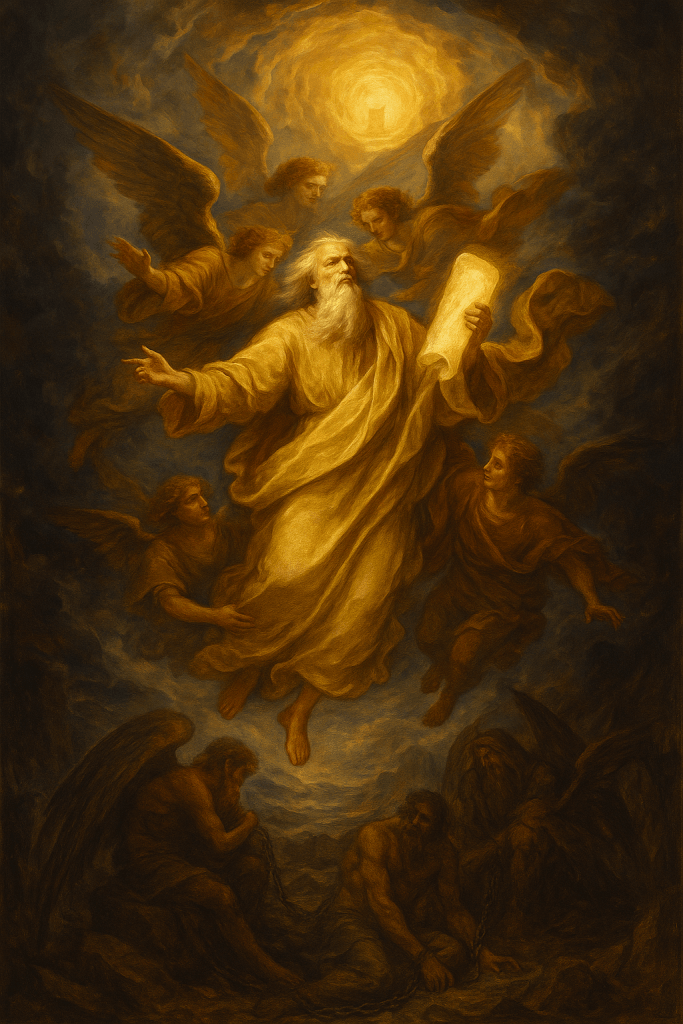
The tenth, the highest, throne of light, Where God resides in glory bright. Here Enoch stood before the Lord, Received his mission and reward.
Transformed into an angel’s guise, With wisdom vast and shining eyes. As Metatron, the scribe of heaven, To him the secrets all were given.
He saw the watchers’ grievous fall, Their union with the daughters all. The Nephilim, their offspring dire, Brought violence, sin, and unquenched fire.
He warned of floods to cleanse the land, Of Noah’s ark and God’s command. He penned the courses of the stars, The calendar of sun and Mars.
He spoke of judgments yet to be, Of righteous paths and destiny. He taught his sons to seek the light, To walk with God, to do what’s right.
Then back to heaven he was brought, His earthly mission fully wrought. No death he tasted, nor decay, But lives with God, still to this day.
The Scroll of Israel: A Lyrical Poem of Promise, Warning, and Hope By Marguerite Grace
I. THE PROMISE
In the land where Abram stood by night, God called with fire, not voice of fright. “From Egypt’s stream to Euphrates grand, To thee I give this sacred land.” (Genesis 15:18, KJV)
Twelve tribes from Jacob’s line would rise— Levi’s law and Judah’s prize. Dan and Gad on hill and plain, Benjamin in Saul’s domain. (Genesis 17:8, Joshua 21:43, KJV)
II. THE LAND DIVIDED, LOVE FORGOT
But hearts grew cold, their worship strayed, To idols dumb, the people prayed. So east they went, by sword expelled, The land they’d lost, the law they held. (Leviticus 26:38, 43, KJV)
Yet even then, the prophets wrote, Of fig trees ripe and hope remote— Of one day soon when leaves would show, That time had come for truth to grow. (Matthew 24:32–34, KJV)
III. THE SIGNS TO COME
Now signs abound, the sky grows grim— The lights go out, the saints grow dim.
“Knowledge shall increase,” it’s said, And men will run as fears are fed. (Daniel 12:4, KJV)
Wars will rise, and nations rage, Famines shake the dying age. (Matthew 24:6–7, KJV)
False prophets preach, their numbers grow, Love turns cold, and sin does flow. (Matthew 24:11–12, KJV)
The Gospel preached from shore to shore, Then cometh end and time no more. (Matthew 24:14, KJV)
Scoffers mock and truth they stain, As in the days of Lot and rain. (2 Peter 3:3, Matthew 24:37, Luke 17:28–30, KJV)
The moon turns red, the sun grows black, And heaven’s host begins attack. (Luke 21:25, Matthew 24:29, KJV)
IV. THE WAR OF ALL
To Megiddo’s plain, they march to fight, Where swords meet fire and wrong meets right. (Revelation 16:16, KJV)
Jerusalem, they seek to tear, But Christ shall land and split the air. (Zechariah 14:2–4, KJV)
Upon white horse He rides again, And stops the rage of godless men. (Revelation 19:11–15, KJV)
The beast is thrown, the false one too— To fire’s end, both bid adieu. (Revelation 19:20, KJV)
V. THE BURIED WORD
Yet in the hills and caves concealed, Are Bibles set for truth revealed. For tribulation’s seekers lost, To find God’s Word at any cost. (Psalm 119:11, KJV)
VI. THE WAY TO LIFE
But greater still than every sign, Is Christ who paid your debt and mine.
“All have sinned,” the Scripture rings, And death, it says, is what sin brings. (Romans 3:23, 6:23, KJV)
But God showed love, and Christ did die, To lift the curse, to draw us nigh. (Romans 5:8, KJV)
Confess Him Lord, believe He lives, And He’ll forgive, and He forgives. (Romans 10:9, 13, KJV)
VII. THE CALL
So now, dear soul, the scroll is shown, The hour near, the signs full grown.
The fig tree stirs, the sky grows red— Come now to Christ, be raised from dead.
Choose the Savior, take the key, Escape the wrath, and be set free.
“Yes, I Would Hide Her” For Anne Frank, and in the Name of Christ
There are two kinds in the hour of trial: those who bar the door with holy hands, and those who smile with a Judas smile, who open the gate at death’s commands. Yes, I am she who would take her in, because to do so is to flee from sin.
Anne, with her lamp of paper and ink, spoke where silence was bought by fear— a child who made the conscience think, whose whispered hope still echoes here. She should have been safe on any street— not starved in silence beneath defeat.
Why did she hide? Because men grew cold. Because power kissed the Reich’s black boots. Because Jews were hunted for lies foretold, and mercy shriveled at poisoned roots. So she climbed the stairs to a secret sky, to wait for justice, or else to die.
But there were hands that did not shake— Miep, with bread beneath her coat. Victor, Johannes, who chose to stake their souls on truth, not vain banknotes. They walked the path that Christ once gave: “Defend the poor and needy… Save.” (Psalm 82:3–4)
Yes, I, Margaret Ann, would hide her, because my Christ commands me so: “I was a stranger, and ye took me in.” (Matthew 25:35) To shield the innocent from their woe is faith in action, grace made whole— the fruit of love, the truest goal. (James 2:15–17)
For God has said, “Open thy mouth for those appointed unto death.” (Proverbs 31:8–9) And when hate marches from the south, we answer not with empty breath— but with a door, a meal, a hand, and mercy as our holy stand.
“Learn to do well… relieve the oppressed.” (Isaiah 1:17) Not with noise, but quiet deeds. When they are hunted and dispossessed, we meet their pain with word and needs. For “what doth the Lord require of thee, but to do justly, love mercy, walk humbly?” (Micah 6:8)—this speaks to me.
And if you judge, remember well: “Judge not, that ye be not judged. For with what judgment ye judge, ye shall be judged.” (Matthew 7:1–2) He sees the measure that you bring— and “mercy rejoiceth against judgment.” (James 2:13) To scorn the weak is a fearful thing.
Christ said, “Judge righteous judgment.” (John 7:24)—not by sight, nor by fear’s sway. But by the heart that breaks for others, and walks in truth, not in delay.
Do not forget the ones who failed— who saw the bleeding, turned aside. The priest, the Levite, hearts impaled by their own fear and tribal pride. But Christ said, “Go and do likewise” still, (Luke 10:37) The helper walked, the cowards stood still.
“Remember them that suffer,” too. (Hebrews 13:3) “Entertain strangers,” for some are divine. (Hebrews 13:2) The rich man feasted, yet never knew that Lazarus starved beneath the sign. Now he thirsts—while the poor man is blessed, for mercy never once touched his breast. (Luke 16:19–31)
Yes, I would hide her, and I would pray, and bring the bread and draw the shade. To do this is the Christian way— to love the life that God has made. And when they ask who passed the test, I hope He says, “You loved the least.” (Matthew 25:40)
I slept beneath the whispering trees, My soul undone by silent pleas. Upon a stump the cross still stood, And in the snow ran drops like blood.
The voice came not in wind or flame, But wrapped in light, it called my name: “See what comes upon the earth— The hour of fire, the threshing birth.”
A scroll unrolled before my eyes, Seals cracked beneath the darkened skies. Each trumpet cried, each angel sighed— And saints were sealed, and kings defied.
I saw the sea turn into gore, The rivers die from heaven’s war. A bitter star fell through the air— Yet still the remnant knelt in prayer.
A pit was torn beneath the ground, And out swarmed dread without a sound. But those who bore the mark above Stood hidden in the wrath with love.
Then war resumed with thunder’s breath, A third fell quick to flame and death. No man repented of his pride— They shook their fists, and still they died.
I wept as two in sackcloth cried— Then fell and rose, then testified. The streets grew still, the dead drew breath— And heaven called them home from death.
The seventh trumpet split the skies— The throne declared: “Now kingdoms rise!” The temple flamed, the ark was seen— And judgments came like lightning keen.
A dragon cast from heaven’s height, Prepared the beast, adorned with might. False prophet praised his every scar— And marked the world beneath a star.
The remnant watched from cave and stream, Their lamps still lit, their fasts extreme. They saw through lies, they heard the tone— And followed still the Lamb alone.
Then bowls were poured in searing waves, The seas turned red, the sun misbehaved. The beast’s throne fell, the Euphrates dried— And demons leapt from mouths that lied.
The harlot dressed in gold and pride Drank martyr’s blood and prophesied. But judgment came in burning breath— And Babylon was choked by death.
A rider burst from heaven’s seam, His robe was dipped in judgment’s stream. The beast was seized, the war was won— The reign began beneath the Son.
A thousand years the Lamb held reign, And locked the dragon, broke his chain. The earth knew peace, the nations grew— But not all hearts were clean or true.
The foe was loosed a final breath, He raised the nations unto death. But fire fell swift from skies above— And silence reigned where once was love.
The throne was white, the Judge was true, The dead stood up in trembling view. The books were opened, names were read— The righteous robed, the wicked fled.
The earth was gone, the sea no more— A holy city came ashore. The Lamb, the light, the gate, the tree— The face of God was all to see.
A river flowed from throne and tree, With fruit for life and leaves for peace. The Spirit and the Bride both cried— “Come drink, ye thirsty—be supplied!”
I woke with tears upon my face, Still tasting heaven’s final grace. The scroll was sealed, the song was done— Yet still the cry: “Behold, I come.”
So reader, hear this prophet’s dream— The fire, the flood, the crystal stream. The call is loud, the hour is grey—
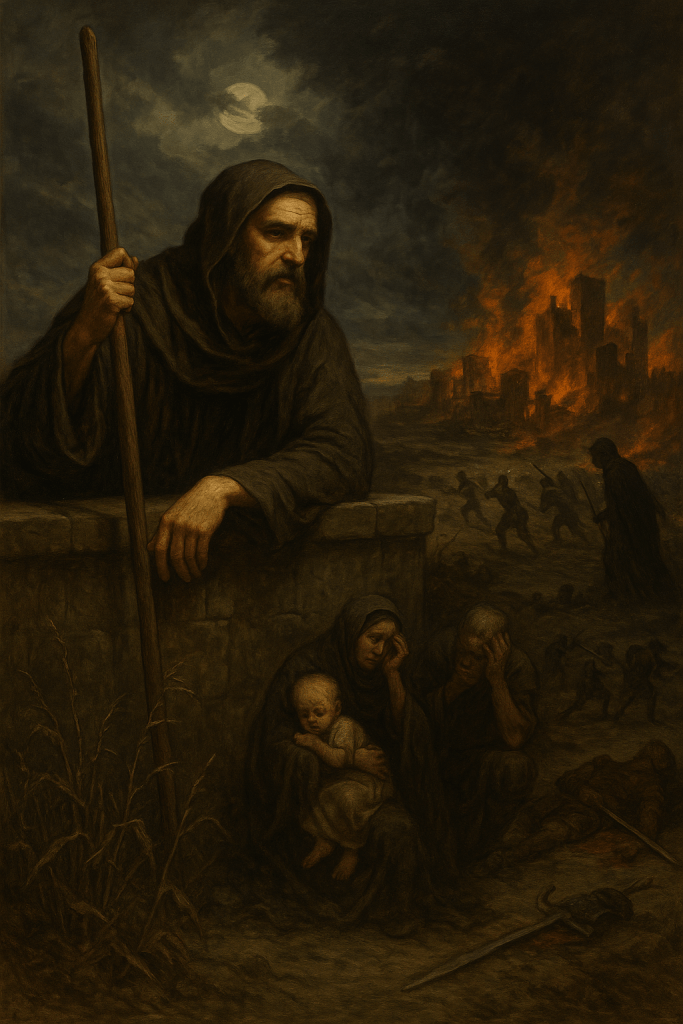
The watchman leaned upon the gate, His face was gray, his heart was late; He heard the earth in anguished cry, He saw the stars fall from the sky.
The fields were cracked like broken bone, The rivers shrank, the seeds unsown; The farmer’s plow turned up dry dust, The bread was gone, the bins held rust.
“Behold, the famine rides the land,” The watchman cried with lifted hand. “The pale horse runs, the scythe is swung— The songs of harvest go unsung.”
The storehouse doors were ripped apart, The hungry clawed with savage heart; The merchant weighed with crooked scale, The widow sold her wedding veil.
The streets were fire, the stones were blood, The law was drowned beneath the flood; “Nation shall rise ’gainst nation still,” The prophets spoke—and speak they will.
The cities roared with lawless cries, The markets burned before men’s eyes; The rulers bartered truth for lies, While brother watched as brother dies.
The earth convulsed in wrath and flame, The seas rose up to curse man’s name; The mountains crumbled into ash, The sun grew dark, the heavens crashed.
“There shall be signs in sun and moon,” The scroll had warned—a solemn tune— “The stars shall fall, men’s hearts shall fail, The roaring seas, the winds that wail.”
The sickness flew on unseen wings, The pestilence claimed priests and kings; The faces once so bold and fair Now sank in pallid, hollow stare.
And wars were loosed from east to west, And blood and smoke became man’s guest; The sword devoured without end, As father slew his father’s friend.
“Ye shall hear of wars, and rumors spread,” The scroll had said—the prophets bled. “But see ye be not yet afraid; These sorrows must first be displayed.”
The poor man wept beneath the lash, The rich man slept upon his cash; The orphans roamed in bands and hordes, While tyrants laughed and drew their swords.
The love of many waxed ice-cold, The faithful few grew thin and old; The churches bent to Caesar’s crown, The altars fell, the crosses down.
The Watchman wept upon the wall, “O hear, O see, O heed the call! The thief approaches in the night, The house shall fall for want of light.”
“Had the master known the thief would come,” The Watchman cried, “he’d guard his home!” “He’d keep his lamp, he’d bar the door, He’d stand, and not fall to the floor.”
But still they danced, and still they feasted, Still they mocked, and still they wasted; Their hearts were drunk on ease and gold, Their eyes were blind, their hands were cold.
The Watchman cried: “Repent! Return! The fields are ash, the seas shall burn. The time is short, the judgment sure, Only Christ can yet endure!”
Food shortages, and famines dread, The weeping child, the broken bread; Civil unrest, the clash of shields, The burning homes, the blood-soaked fields; The roaring plagues, the roaring seas, The broken laws, the fallen trees; The hatred, pride, and lust for gain, The rising flood, the driving rain.
O world! You seek another king— A man to cure this grievous sting! But none shall rise to heal the land; The wound is deeper than man’s hand.
“Trust not in princes, nor in men,” The Watchman spoke again, again; “Their breath departs, their dust remains— Only the Lamb can break these chains!”
Only Christ—who bore the tree, Who rose to set the captives free— Only Christ—whose blood was shed, Can raise again the broken dead.
The Watchman knelt in ash and dust, “O soul, repent! O soul, you must! The Thief comes swift, the night is black; Prepare your heart, or lose the track.”
And still the world slept in its pride, And still the Thief approached, to stride Across the gates, across the fields, To claim what man refused to yield.
O watchers, trim your lamps anew! The trumpet sounds! The sky breaks through! The Watchman calls with dying breath— “Arise, arise, escape the death!”
For soon the heavens split and rend, And Christ, the King, shall crown the end; The sword shall fall, the fields shall bloom, For those who pass the judgment’s gloom.
The Watchman fades into the mist, The Thief draws near, unseen, unkissed. The hour is late, the fall is steep— Awake, O soul, no longer sleep.
I knelt at pews while still a child, with hands so small, with prayers so mild. The hymns would rise like mist and call, and I believed — I heard them all.
The light through stained glass warmed my skin; the pastor’s voice would fold me in. I whispered prayers to skies unseen, and dreamed of Heaven, soft and clean.
But seasons turn and children grow; the river pulls, the winds must blow. A husband’s hand, a wedding ring, a crib, a pot, a roof, a spring.
I bore my sons, I fed my kin; I wore the earth upon my skin. There was no time for sacred things — only the hush of passing wings.
At night, I’d whisper half a prayer, but sleep would steal me unaware. I thought: The Lord is kind and good — He knows I’d come, if only I could.
Years galloped past like pounding rain, the harvests thick, the labors plain. My Selah hands grew worn and grey; the hymns I sang were tucked away.
I paid my dues, I kept my name, I harmed no soul, I played no game. I left the cross to gather dust, but told myself, Believe I must.
Believe, I said — and thought it done, as if belief alone could run the race the saints had bled to win, without the rending death of sin.
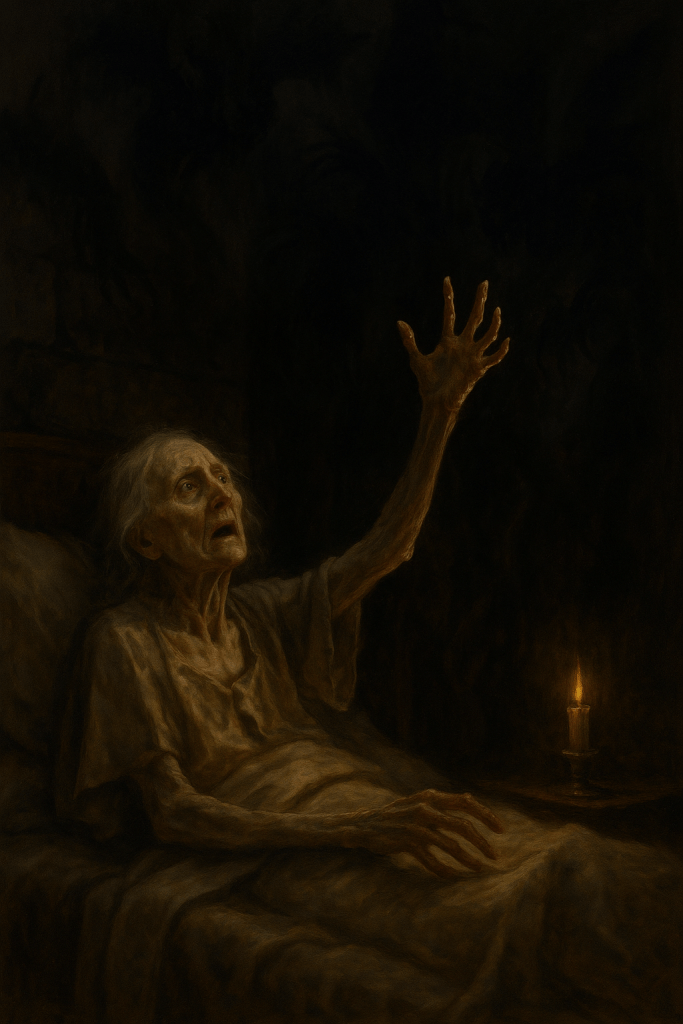
The candle falters in its glass; the cold around me breathes like grass. The walls grow slick; the floorboards moan; the whisper slithers through the stone.
What stirs beyond the withered pane? What shadow stains the windowpane? The light itself begins to flee — O Christ, O Christ, have eyes for me!
They’re here! They creep — they clatter low — their talons rake the floors below. Their wings are moths, their breath is tar, they know my name — they call, Selah!
They grin with mouths too wide for face; they limp, they crawl, they have no grace. Their voices splinter into glass, their claws reach through the hollowed past.
The crib, the fields, the song, the day — they tear those memories away. And in the end, I see the truth: I traded Christ for work and youth.
Oh Christ, You watched me build in sand; You knocked — and still I stayed my hand! You begged — and I was deaf with care; You bled — and I was unaware.
I wore Your name like borrowed thread, I walked the line the living tread. But never bent, and never wept, and now — the harvest I have reaped.
They’re at the bed! Their fingers thorn! Their eyes are pits of broken scorn! They sing a song of withered grace; they chant the failures of my race.
I reach — but no hand grips my own; I fall — and none will claim this bone. I cry — but mercy shuns the call; I plead — but pride has damned it all.
O Christ, O Breath, O wounded Lamb — If there is pardon, let it stand! If one drop lingers in the cup — if ever love can lift me up—
But no: the doors are shut and sealed, the iron teeth of sin revealed. Forgive me still, though faithless I — forgive me, lest I screaming die—
The watchers weep — but Selah’s fled, drawn down among the ragged dead. The candle sputters into black, the shadows tear the heavens back.
And Selah’s breath is heard no more, but lost beyond the bolted door.
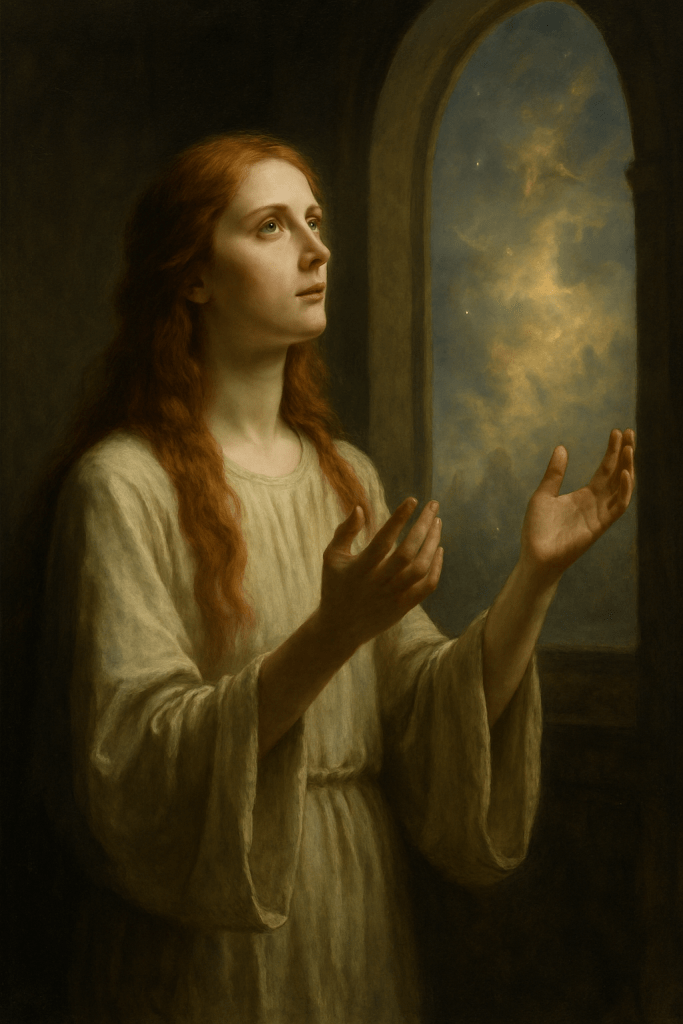
Beyond the memory of mornings, before the dust first knew its name, I stood at a trembling window.
And I beheld: the gardens before breath stirred the clay, the choirs before the wound of pride, the Breath before sorrow bent the stars.
A vision not born of dream nor waking— but stitched into the marrow of spirit, woven where no sun could burn, where no hand could tear.
I saw him— the Morning Star, crowned in ancient fire. I saw the grief that silenced the harps of dawn, and the ache that crossed the deep when love was betrayed.
And I saw the earth— this precious earth— pierced by the venom of his fall.
Thus I wept with the Breath, and thus I sang what I beheld.
Part I — The Fall
Once, crowned in fire and woven light of Heaven, he sang with tongues of flame, unbent by Pride. O Lucifer, son of the morning, how swift the Fall! The stones of fire trembled to birth the Earth, but none thought to Tempt until one mouth opened against the holy Judgment.
“Thou wast perfect in thy ways,” so cries the Judgment, “until iniquity was found in thee,” even in Heaven. No beauty nor wisdom could stay the Tempter’s Tempt; no love could unfasten the clasp of Pride. “I will ascend above the heights of the clouds!” he roared— yet Earth was made the tomb of that Fall.
He fell — O stones, remember the Fall! The Breath withdrew; the Voice spoke Judgment. “How art thou fallen from Heaven, O Lucifer!” and Earth bore up the ash of the shattered Heaven. Still in his burning, he clothed himself with Pride, still seeking souls to Tempt.
In Eden’s hush, he slipped to Tempt, to drag down the Breath into the Fall. “Ye shall not surely die,” — so whispered Pride. He laughed, hidden behind the tree of Judgment, as dust forgot its singing in Heaven and blood began to stain the fields of Earth.
Thus death became the covenant of Earth, and breath the spoil of Tempt. He wore the ruin of fallen Heaven as a blackened crown of the Fall, mocking the coming Judgment, building his kingdom upon Pride.
O bitter, bleeding angel of Pride— no throne shall rise from Earth. The scrolls are sealed with fire and Judgment; no ash nor flame can unmake the Tempt. He shall drink, full measure, his Fall, when the Breath who bore him breaks Heaven.
Sing, Heaven! Roar, Earth! End, Pride and Tempt! The Fall is cast, the stone is cut, the Judgment is sure.
Interlude — The Grief of God
O Morning Star, son of my longing— how bright thou wert among the stones of Heaven. I sang thee into light, I clothed thee with fire; thy heart beat with the music of my own Breath. Yet thou hast torn the cords of joy, and the harps of dawn are silent for thee.
I watched thee build thy pride from the dust of my love. I called thee, I waited, but thou wouldst not hear. O beloved ruin, thou hast chosen the shadow. How art thou fallen, whom I adorned in glory? How art thou severed from the gardens of delight? I grieve, but justice must walk its solemn path.
Yet my sorrow burns deeper still— for thou hast wounded the earth I love, poisoned the rivers of my creation, tempted the children who bear my breath. Thou hast bruised my lambs, and taught my sons to weep in the dust.
I have no pleasure in the death of the fallen; but the wound of pride festers and must be cut. The dragon roars against the womb of earth; the liar poisons the hearts of men. Shall I not answer the cry of the broken? Shall I not lift the crushed and gather the bruised?
O Lucifer, my once-burning song— I weep for thy lost beauty, and I weep for my beloved sons and daughters whom thou seekest to devour. The harvest is ripe; the sickle gleams. Judgment rides, sorrowing, but sure.
Part II — The Judgment
Still he prowls, loosed upon the weary Earth, still hungering to Tempt, to wound the marrow made for Heaven, to drown the newborn song in Pride, to weave the crowns of the mighty with Fall, to resist the trumpet of coming Judgment.
But lo — even the air thickens with Judgment! The saints breathe fire across the thirsty Earth, the wounded Lion roars against the gates of the Fall. No hand nor heart can long endure the Tempt, no king can kiss both dust and Pride and hope to stand among the halls of Heaven.
In the desert, he dared to whisper against Heaven: “If thou be the Son of God…” yet the Judgment replied with scripture, cutting through Pride. Man shall not live by bread alone — nor Earth be his dominion. Though many may Tempt, none shall break the seal of the Fall.
At Job’s gates, he raged to Tempt— smiting the righteous, daring to shame Heaven, grinding hope into Fall. Still the answer was only Judgment: “The LORD gave, and the LORD hath taken away.” Thus, Earth declared the frailty of Pride.
He filled the halls of kings with Pride, spoke through lips of priests to Tempt, choked prophets in their blood on Earth, and pierced the hands of Heaven. Yet in the crumbling of Golgotha, the Judgment was sealed against him, undoing the Fall.
Then shall he fall—O glorious Fall! Bound a thousand years in judgment, broken Pride, gasping as fire sings the Judgment. The lake of burning death shall Tempt him no more, and neither Heaven nor Earth shall bear the trace of Tempt.
Cry, O Earth, for the last Fall; sing, O Heaven, over fallen Pride; weep no more — Judgment silences Tempt forever.
Final Envoi
Heaven is stitched with unbroken flame; Earth blooms where Pride is no more; the Fall is closed, and Tempt meets endless Judgment.
(A Sacred Epic of Breath, Judgment, and Proclamation)
Invocation: Breath Beyond Breath
O Breath before stars, O Flame who kindled dust into man, O Hand who wrote the marrow into the bone — bend low and breathe again.
Breathe upon the broken fields. Breathe into the hollow ribs. Breathe into Allecta, the Called One, who must carry the prayers and the cries into the twilight of the earth.
Crown her breath with mercy. Shield her marrow with flame. Let her walk the path the ashes fear to remember.
I. The Summoning of the Dream
Allecta lay among stones, and the dust clothed her in mourning.
She slept — and the earth opened.
A Voice, sharper than iron and older than grief, called her:
“Rise, Allecta. Pray the prayers forgotten. Breathe the breath buried by time. Walk where the strong have fallen, and gather their cries into your marrow.”
She rose barefoot into the Dream — the fields around her heavy with seeds that would not wake.
II. The First Songs: Breath of the Ancient Ones
The seas split before her dreaming eyes. Moses’ voice hammered the air:
“I will sing unto the LORD, for he hath triumphed gloriously…”
Tambourines shimmered at the broken shores, and Miriam’s breath caught her hand:
“Sing ye to the LORD, for he hath triumphed gloriously…”
Mountains crumbled under Moses’ last cry:
“Give ear, O ye heavens, and I will speak…”
The rain of blessings fell from the elder’s tongue:
“The eternal God is thy refuge, and underneath are the everlasting arms.”
Allecta knelt, tasting the ashes on the wind, praying each breath into her own blood.
III. The Battlefields of the Spirit
The fields blackened with smoke.
There, Deborah’s cry split the dusk:
“Praise ye the LORD for the avenging of Israel!”
At the temple’s shattered threshold, Hannah whispered:
“My heart rejoiceth in the LORD…”
The valleys shuddered under David’s defiant song:
“The LORD is my rock, and my fortress, and my deliverer…”
And the winds mourned with David’s lament:
“How are the mighty fallen!”
Allecta pressed these cries into her ribs until her breath carried their thundering sorrow.
IV. The Gathering of the Psalms
The hills and rivers wept the old breath-prayers:
From the hollow places:
“Out of the depths have I cried unto thee, O LORD.”
From the broken marrow:
“Create in me a clean heart, O God; and renew a right spirit within me.”
From the dying years:
“So teach us to number our days, that we may apply our hearts unto wisdom.”
Allecta walked through their falling echoes, her bones stitching themselves with their hope.
V. The Descent into Ash and the Place of Calling
The ash thickened. The sky bent low. And Allecta came to the Mount of Olives.
The ancient trees clawed at the bleeding heavens. The stones groaned under her bare feet. The wind that brushed her brow had once carried the weeping of the Man of Sorrows.
Here, beneath Gethsemane’s twisted arms, the Breath Himself spoke.
“Allecta, Daughter of Dust, Called before the fields were sown, Chosen before the rivers found their mouths. Awake — for the fields are withering. Awake — for the harvest has come. Proclaim the Breath who bleeds life into ashes. Foretell the days of crumbling crowns and broken altars. Cry aloud — spare not — for you are sealed by the Name that sorrow cannot drown.”
Allecta fell to her face and wept.
She rose — her hollow ribs burning with unseen fire.
She was no longer a dreamer. She was the Proclaimer.
VI. The River of Prophecy
Beyond the olive trees, the dream drove her to a well — carved in stone, forgotten by the proud.
There, she drank from the Breath’s hand:
And with the Woman at the Well, she cried:
“Give me this water, that I thirst not…”
Water unseen flowed into her marrow.
She rose and stood before the ruins of the city.
And Esther, crowned with fragile courage, breathed:
“If I perish, I perish.”
Allecta lifted her voice:
“Let me perish if it must be, but let me stand between the living and the dead!”
The ashes roared. The heavens cracked. The rivers gasped for breath.
Allecta, bearing the prayers of the forgotten, lifted her arms to the wounded skies.
VII. The Proclamation of Allecta
Then Allecta cried aloud to the broken fields:
“Hear, O earth, and shudder — for the Breath has seen your pride! The cities shall crumble; the oceans shall bleed away; the thrones of liars shall rot in their splendor!”
“Turn, O dust, and be crowned in mercy! Seek the Wounded Name while there is yet breath!”
“The mountains shall kneel; the rivers shall retreat; and every tongue shall confess the Name torn by thorns and crowned in everlasting!”
“Awake, O sleepers! Cry aloud, O withering bones! For the days of harvest draw near, and the sickle of the Breath is in His hand!”
The broken stones sang beneath her feet. The breath of the fallen rose behind her like a tide.
And Allecta stood — a living psalm, a burning cry, a breath stitched from the marrow of the everlasting.
VIII. The Ascent into the Dawn
The dead fields stirred.
The rivers remembered their mouths.
The mountains lifted their heads.
And Allecta, the Called One, the Proclaimer of the Wounded Breath, walked into the coming storm, bearing the everlasting flame.
“The wounded name waits, beyond the splintered gate.”
The Gypsy, Pandora and the Ark of the Last Choosing
(An Ode of Breath and Judgment)
I. The Wanderer and the Sealed Ark
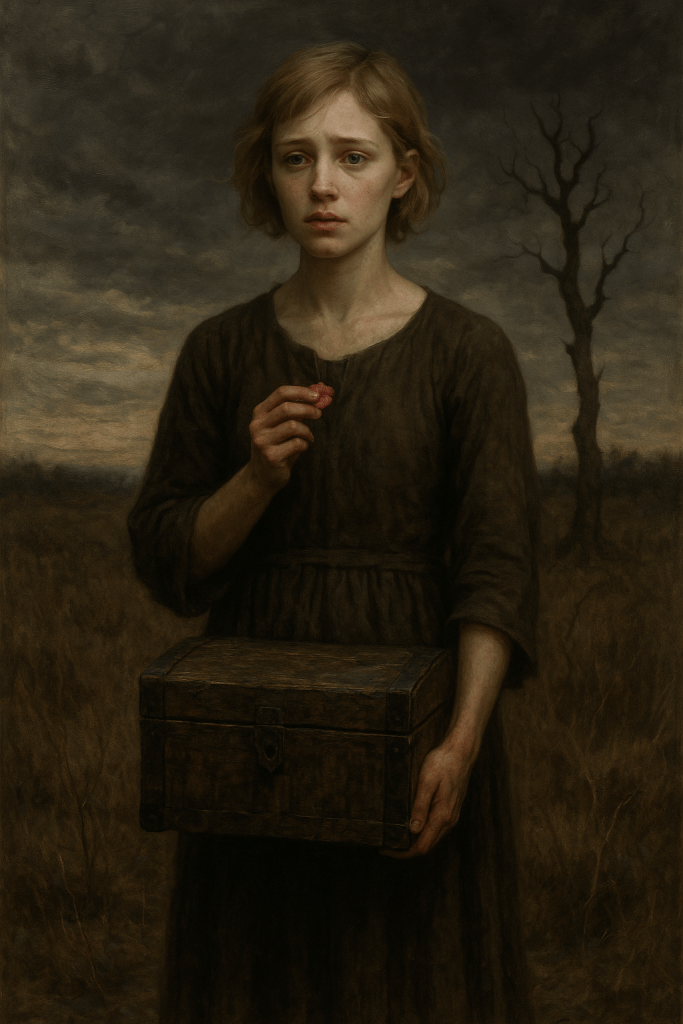
The Gypsy, Pandora walked the trembling fields of dusk, her hands clutching an Ark sealed by silence, an Ark where the echoes of a thousand broken roads slept beneath iron breath.
She was told to choose — before the last leaves fell from the blackened tree, before the rivers lost their mouths, before the sky tore its breath from the hills.
The Ark warmed under her hand, trembling with the weight of all forgotten songs.
II. The Unsealing of the Riddles
The first seal cracked — and a Cross bleeding in twilight spoke:
“Drink the death that births forever.”
The second sighed — a Crescent folding into dust:
“Bow low. Bind the hours with longing.”
The third spun — a Wheel grinding dust into dust:
“Walk the births, break if you can.”
The fourth trembled — an Empty Garden whispered:
“End desire. Slip into the hollow beyond fire.”
The fifth shuddered — stone Tablets thundered:
“Bind the marrow to the Law unseen.”
The sixth curled in mist — a formless River whispered:
“Flow without striving. Forget the crown.”
The seventh moaned — roots and stars twisted their tongues:
“Kneel to root and stone. Let magic crown your dust.”
The eighth glittered sharp — mirrors birthing their own gods:
“Shape the dream. Shape yourself into dominion.”
The ninth fell cold — ashes weeping upon ashes:
“There are no gates. Only silence at the end.”
The tenth whispered without sound:
“Perhaps. Perhaps not. Wander, and forget to seek.”
Three breaths bound themselves last: • One wreathed in Mystery veiled. • One cradling a Rock and torn Bread. • One blazing through a Book cracked by exile.
All the roads shuddered in the Ark, each one a cry half-born.
III. The Sorrowing of the Soul
The Gypsy, Pandora sat by the riverbank and wept, for the river bore no bridges, only the drowning of old songs.
She asked:
“Is there a road that leads beyond breath?”
And the Ark — for the first and only time — breathed back:
“Not all songs break the veil.” “Not all rivers find the sea.” “Some roads bury themselves in dust.”
“But one path bears a Name deeper than sky’s wound. One path bleeds a Cross into the bones of the earth.”
The final hinge gave way.
A splinter of torn wood fell into her hand, warm and bleeding, unseen.
The Ark sighed out its last breath and fell silent under the thorned stars.
IV. The Reckoning of Blood and Breath
The Gypsy, Pandora rose — trembling, and for the first time, feared death not as an end, but as a weighing.
Her heart, once wild, now beat heavy, the slow drum of judgment calling her to reckon.
“Choose,” whispered the blood unseen. “Choose before the blade carves silence into your breath.” “Choose before the marrow forgets itself.”
She looked inward — and found not a garden, but a wasteland of abandoned prayers, a tower of cracked mirrors crowned by dust.
Judgment was not a riddle. Judgment was a sword humming through the hollow bones.
She wept — not sweetly — but as a soul weeps when torn from its illusions.
The blood on the splinter sang into her veins. The Voice that called her name was not one voice among many, but the Pierced One — the Thorned Shepherd — the Silent King.
V. The Surrender to the Wounded Crown
The Gypsy, Pandora knelt — broken beneath the thorn tree, dust on her brow, blood in her breath.
The splinter burned in her hand. The Name carved itself into her ribs.
Between the last breath and the fading stars, she was born anew — not by her longing, not by her seeking, but by a wound not her own.
The Ark of the Last Choosing lay shattered. The riddles fled into mist. The river darkened and stilled.
She rose, barefoot and scarred, her soul no longer her own.
The splinter sang beneath her skin. The Blood throbbed the Name through her broken marrow.
No road but the torn one now. No hope but the bleeding One. No gate but the gate crowned in wounds.
The sky lowered its brow. The mountains knelt. The stars gave their last cry.
And the Gypsy, Pandora walked into the breath beyond breath, her tears a river at her heels, her soul bought in blood, her name written in wounds across the everlasting.



 verse, possies, sonnets, and short stories