In the House of Prayer — WWJD
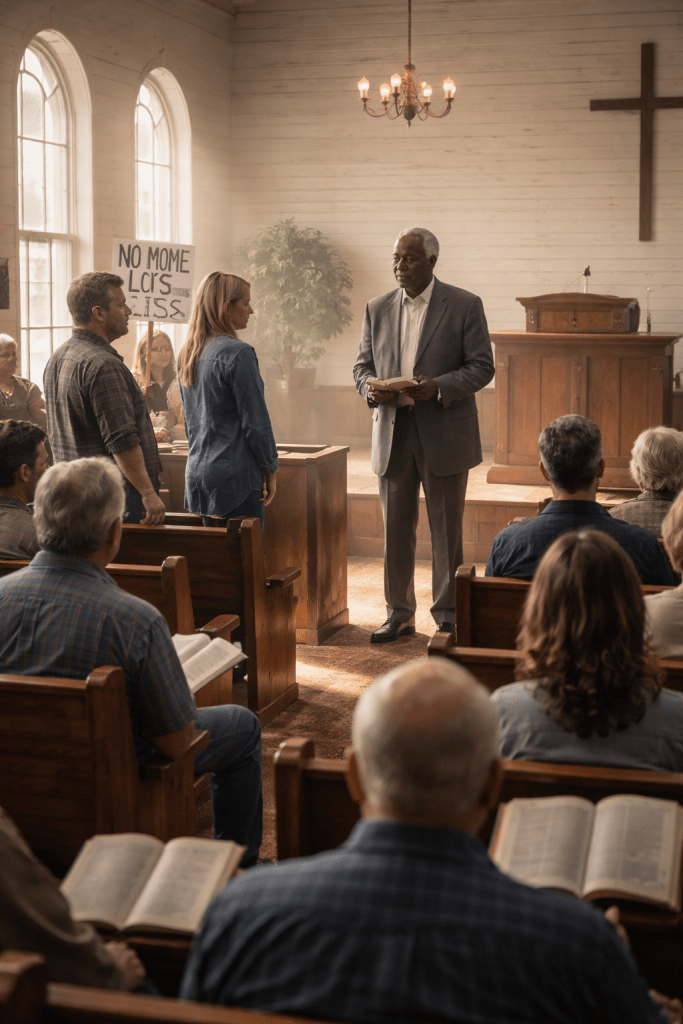
The church sat where the paved road thinned into gravel, and the gravel thinned into patience, its white boards weathered by years of sun and prayer. The hand-painted sign out front read House of Prayer, because Jesus Himself had said, “My house shall be called the house of prayer,” and no one there believed it needed improvement. Inside, the pews bore the marks of long use, worn smooth where hands had rested through grief, joy, and waiting. The air carried wood, dust, and oil—the quiet scent of reverence practiced more than explained.
Elder Samuel Cobb stood behind the pulpit with his Bible already open, because a true disciple knows the Word must stand first.
The piano began softly, not performing but gathering the room, and the first hymn rose in uneven harmony as voices found one another. Singing was never rushed here, because worship was understood as agreement with God rather than display. Heads bowed, eyes closed, hands lifted or folded, and the name of the Lord Jesus Christ was spoken with familiarity and awe. Prayer followed the final chord, offered aloud and plainly, thanking Christ for His presence and asking for obedience before understanding. The room settled into attention rather than comfort, and that distinction mattered.
The doors opened hard in the middle of the second hymn, and sound entered before bodies—loud voices breaking against the stillness like sudden weather. A man shouted accusations without aim. A woman laughed sharply, as though contempt were armor. A poster scraped the doorframe, as if it had already been carried through other sanctuaries. Heads turned together, and confusion rippled through the congregation, because disruption always tests whether belief is practiced or only spoken.
A deacon whispered, “What do we do,” and another answered too quickly, “This shouldn’t be allowed,” because fear often disguises itself as concern. He that hath ears to hear, let him hear, because crowds were loud in Jesus’ time too.
Elder Cobb did not raise his voice or strike the pulpit, because Scripture had already taught him restraint. He remembered how people cried out while Jesus taught—how a blind man shouted over the crowd until Jesus stood still. He remembered children pulling at Christ while disciples tried to send them away, and how Jesus corrected the disciples instead, saying, “Suffer the little children to come unto me.”
These memories were not abstract to him; they were instruction.
He lifted one hand slightly, not as command but as presence, and the room quieted enough to breathe.
Four members near the center pews leaned together, Bibles already open, because confusion is answered with truth, not volume. One said quietly, “We need to remember what Jesus actually did,” and another replied, “WWJD—What Would Jesus Do—means we already have the answer in His Word.” They turned pages together and read aloud how Jesus answered hostile questions without anger when leaders tried to trap Him. They spoke clearly so others could hear.
A third read how Christ defended the woman who disrupted a meal when others wanted her silenced, reminding the group that brokenness is not an offense to God. The fourth said, “He that hath ears to hear, let him hear,” and the phrase settled into the room with weight.
They continued, reading how Jesus did not retaliate when mocked by soldiers and rulers. The room grew still enough to hear breathing. One turned pages again and read the moment Jesus overturned tables, explaining carefully that this was the only time force appeared, and that it was because worship itself had been blocked.
They spoke plainly about the difference between wounded people and hardened exploitation, and no one interrupted them, because the anointed Word of God for guidance—the Holy Bible—was doing the speaking.
Prayer rose again afterward, thanking God for clarity and asking for obedience, not victory. Singing returned softly, a hymn of surrender rather than certainty.
As they read, one member said, “The disciples were confused too,” and another read how Jesus walked with them on the road, opening Scripture patiently until understanding came. Heads nodded, because confusion felt familiar, especially in a world louder and faster than any generation before.
Someone whispered, “So we stay calm,” and another answered, “We stay obedient,” because the Word had already settled it.
They read aloud, “By their fruits ye shall know them,” and then, “Beloved, believe not every spirit, but try the spirits whether they are of God.” In an age of amplified voices and constant demands, discernment was no longer optional but commanded.
Elder Cobb stepped down from the pulpit and stood level with the disruptors, hands open, posture unthreatening, because Jesus never hid behind authority when souls were present. He listened without interruption, just as Christ listened to the Samaritan woman who came carrying history and questions.
When the man ran out of words, Cobb spoke calmly.
“If you’re angry, we won’t mock you, because Jesus did not mock those who mocked Him. If you’re wounded, we won’t rush you out, because Christ welcomed the broken.”
His voice firmed only when prayer was blocked.
“This is the House of Prayer,” he said, “and prayer will not be taken hostage.”
The boundary was clear, and the difference was understood.
A murmur moved through the congregation—not approval, but clarity. Someone whispered, “Try the spirits,” because Scripture commanded it. Another replied, “Watch the fruit,” remembering Jesus’ words, and they waited rather than reacted.
Elder Cobb prayed aloud for the disruptors and the church together, fulfilling supplications and intercessions for all men. He reminded the church gently that believers are held to the higher standard, and that the servant of the Lord must not strive, but be gentle unto all.
The Holy Spirit settled the room without spectacle.
The posture of the disruptors changed slowly—shoulders lowering, voices quieting—as if something had been disarmed without force. No one claimed authority over them, yet authority had been exercised through obedience to Christ. Respect replaced disrespect, not because demands were met, but because truth had been honored.
The church did not debate what to do next, because God’s Word had made it plain, and they had read it together. No matter what anyone else said or demanded, they now knew the truth, and knowing it bound them to act accordingly.
When the service ended, the House of Prayer remained what Jesus called it.
Love stayed.
Prayer remained.
The Lord Jesus Christ was honored.
And those who had ears heard.
And those who heard obeyed.
Written by Marguerite Grace
Copyright Protected

 verse, possies, sonnets, and short stories